Showing posts with label Judaism. Show all posts

Thursday, May 12, 2016

Israel

According to the Hebrew Calendar, today is Yom Ha'atzmaut (Independence Day), the national day of Israel, which commemorates the Israeli Declaration of Independence in 1948. It is usually celebrated on the 5th of Iyar.

The modern State of Israel was established as a homeland for the Jewish people, after mostly living in diaspora since the 2nd century CE (Common -or Christian- Era). The history of the country dates back to the ancient kingdoms of Israel and Judah, which emerged in the 9th and 8th centuries BCE (Before the Common -or Christian- Era), respectively. It is currently the world's only Jewish State and the Middle East's only democracy.
Israel's Law of Return gives Jews the right to live in Israel and to gain Israeli citizenship. Being a country of immigrants, its population is, therefore, constantly increasing: as of 2016, it totals more than 8 million people.

Israel is located at the southeastern shore of the Mediterranean Sea and the northern shore of the Gulf of Aqaba (also known as Gulf of Eilat) in the Red Sea. It borders Lebanon to the north, Syria to the northeast, Jordan to the east, and Egypt to the southwest. The highest point in the country is Mount Hermon at 9,232 ft, while the lowest one is the Dead Sea at −1,407 ft. The Jordan River runs between these two points.

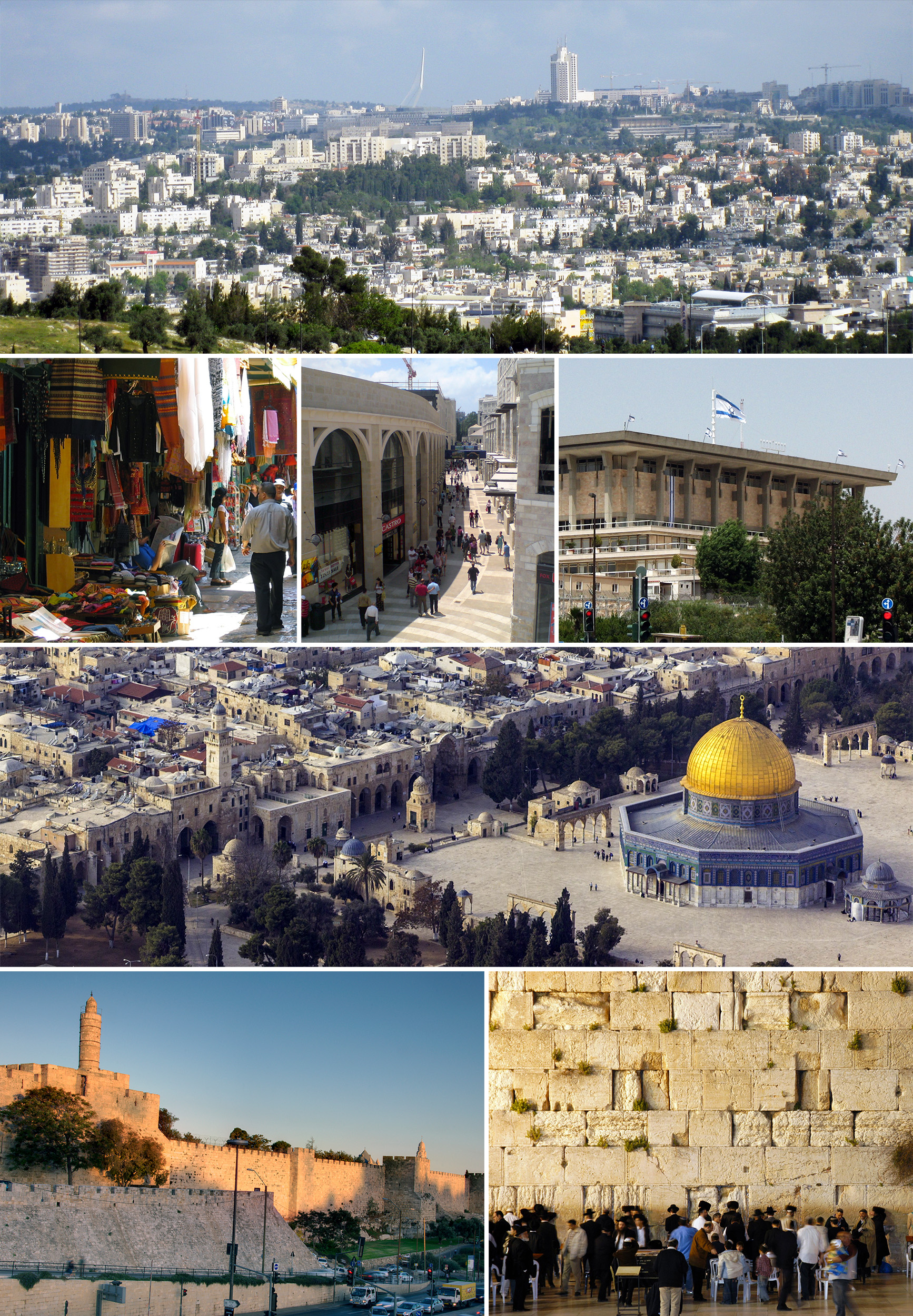
With more than 800,000 inhabitants, Jerusalem is the most populous city and the capital of Israel. However, this is disputed by many countries due to the fact that the eastern part of the city lies in the West Bank, which previously belonged to Jordan and has been administered by Israel since 1967, although it is a partly autonomous territory and it is currently claimed by the State of Palestine. This state also claims the Gaza strip, which previously belonged to Egypt and had been administered by Israel from 1967 until 2005 and is currently ruled by a terrorist group called Hamas.


Wednesday, May 4, 2016

Holocaust Remembrance Day

Yom HaShoah is the Holocaust Remembrance Day. This day falls on the 27th of Nisan. The Gregorian equivalent, though, corresponds to tomorrow: May 5th, 2016.

The Holocaust or Shoah, which means catastrophe or utter destruction in Hebrew, refers to the atrocities that were committed against the Jewish people during World War II.

The Holocaust, from the Greek word meaning sacrifice by fire, was initiated by the members of the National Socialist (Nazi) Party, which seized power in Germany in 1933. The Nazis believed in a doctrine of racial superiority, centering around the idea that people of Northern European descent were somehow better than members of all other races – especially the Jews, who were "unworthy of life."

After taking power, the Nazis gradually restricted the rights of German Jewish citizens and encouraged their followers to commit acts of violence and destruction against Jews and their property. During World War II (1939-1945), the Nazis implemented their "final solution," which was a plan to concentrate and annihilate all European Jews.

Jews were first crammed together in ghettoes and slave-labor camps, where disease, brutality, and malnutrition ran rampant. Eventually, they were sent to death camps, where millions were murdered in special facilities designed to kill a tremendous number of people over a brief period of time.
In addition to the six million Jews who died - two-thirds of the European Jewish population – the Nazis also killed millions of others, including Roma (Gypsies) and Slavs, political and religious dissidents, the handicapped, and gays and lesbians.

Yom HaShoah is a memorial day for those who died in the Holocaust. In Israel, it starts at sundown in a state ceremony held in Warsaw Ghetto Square at Yad Vashem, the Holocaust Martyrs' and Heroes Authority, in Jerusalem. Flags on public buildings are flown at half mast. At 10 AM, an air raid siren sounds throughout the country and Israelis are expected to observe two minutes of solemn reflection:

Monday, August 10, 2015

Star of David

Known in Hebrew as a Magen David (Shield of David), the six-pointed Star of David is composed of two triangles superimposed on each other, forming the shape of a hexagram. It is the symbol most commonly associated with Judaism today, even though it is actually a relatively new Jewish symbol.

READ: Menorah

It is supposed to represent the shape of King David's shield (or perhaps the emblem on it), but there is really no support for that claim in any early rabbinic literature. Indeed, some historians trace it to Jewish communities in the Middle Ages, but these claims are neither fully substantiated nor widely accepted.

In the 17th century, it became a popular practice to put the Star of David on the outside of synagogues, in order to identify them as Jewish houses of worship. Around this time, the star also became part of synagogue architecture in Europe, in the Middle East and North Africa.
After the Dreyfus Affair in the 19th century, the star was adopted by the Zionist movement at its 1897 Congress; this gave the symbol more international prominence. In the 20th century, the star became even more evocative of Judaism when it was used by the Nazis to mark Jews for persecution. And after the Holocaust, the same star became part of the flag of the nascent State of Israel.


Monday, July 13, 2015

Menorah

Everyone knows that the main symbol of Judaism is the Star of David. However, this only became a Jewish symbol in the Middle Ages. Despite its prominence on the flag of Israel and kiddush cups, it is a rather late representative of the Jewish People. However, for most of the history, the Menorah was the preeminent symbol of Judaism. Currently, it is featured on the coat of arms of Israel.


The Menorah is a seven-branched candlestick that was found first in the Tabernacle of Moses, and later in the Temple of King Solomon in Jerusalem. It is mentioned for the first time in Exodus 25:31-40:

Make a lampstand of pure gold. Hammer out its base and shaft, and make its flowerlike cups, buds and blossoms of one piece with them. Six branches are to extend from the sides of the lampstand—three on one side and three on the other. Three cups shaped like almond flowers with buds and blossoms are to be on one branch, three on the next branch, and the same for all six branches extending from the lampstand. And on the lampstand are to be four cups shaped like almond flowers with buds and blossoms. One bud shall be under the first pair of branches extending from the lampstand, a second bud under the second pair, and a third bud under the third pair—six branches in all. The buds and branches shall be all of one piece with the lampstand, hammered out of pure gold.

Then make its seven lamps and set them up on it so that they light the space in front of it. Its wick trimmers and trays are to be of pure gold. A talent of pure gold is to be used for the lampstand and all these accessories. See that you make them according to the pattern shown you on the mountain.


Monday, June 29, 2015

LGBT & Judaism

Within Judaism, there are many shades of LGBT acceptance:

The Reconstructionist Movement was the first movement to publicly address the issue on homosexuality and same-sex marriage in their 1988 report. The Reconstructionist Rabbinical College was the first Jewish seminary to accept openly gay and lesbian students.
LGBT Jews and their families are fully included in Jewish communal life. Reconstructionist rabbis are free to perform same-sex marriage ceremonies.

The Reform Movement has a long and proud history of working for full inclusion of LGBT people in Jewish life and for their full civil rights. In fact, in 1965, the Women of Reform Judaism were calling for the decriminalization of homosexuality. Resolutions by the Union for Reform Judaism and the Central Conference of American Rabbis followed.
LGBT Jews and their families are welcome in all Reform temples. LGBT Jews may be ordained as rabbis. Most Reform rabbis officiate at same-sex ceremonies.

The Conservative Movement used to hold the same position as Orthodox Judaism. However, since the 2000's, they have issued several resolutions in which they affirm that LGBT Jews are an integral part of the movement's families, synagogues and communities. Currently, Conservative Judaism endorses full and equal civil rights for LGBT people.
LGBT rabbis can serve openly since 2006. In the 2010's, the American and British branches of Conservative Judaism formally approved same-sex marriage ceremonies. Nonetheless, the Conservative communities may choose not to conduct same-sex ceremonies.

The Orthodox Movement has a variety of views regarding LGBT people. Its traditional position on homosexuality is well known: two verses in Leviticus (18:22 and 20:13) express unequivocal condemnation of male homosexual sex. The Talmud also disapproves of lesbianism: Shabbat 65a/b and Yevamot 76a.
Orthodox Judaism mostly affirms that Judaism legislates only acts, not orientations. Therefore, homosexual people should not be cast out from the community, even though openly LGBT rabbis are not ordained. It is the homosexual activity that is condemned. Orthodox Judaism opposes marriage equality and will not officiate at a same-sex wedding or affirm same-sex relationships. Even worse, some will even reject LGBT members and/or endorse discredited "reparative therapy."


Sunday, June 7, 2015

Chai

Chai (Hebrew: חי‎) is a Hebrew word that means "alive" or "living." It is pronunced as [χai̯].

It is used a symbol, commonly seen on necklaces, and on other jewelry and ornaments. It reflects Judaism's focus on the importance of life. Indeed, the typical Jewish toast is "l'chayim" (meaning "to life").

The word is made up of two letters: Cheit (ח) and Yod (י). Since every Hebrew letter has a numerical value, the letters of chai add up to 18. Therefore, this number has a special meaning in Judaism. Money gifts and donations are usually given in multiples of 18.


You can read more about it here.

Saturday, May 16, 2015

Jerusalem

Today is Jerusalem Day (Yom Yerushalayim in Hebrew). It is celebrated on the 28th day of Iyar to commemorate the reunification of Israel's capital. Although Jerusalem has been considered the capital city of the Jewish people since the time of King David – who conquered it and built it as the seat of his monarchy in approximately 1000 BCE (Before the Common -or Christian- Era) – there had never been a special day in honor of the city until the Israeli army took over the ancient, eastern part of the city (which had been under Jordanian rule since 1948) on the third day of the Six-Day War in June 1967.


The liberation of Jerusalem in 1967 marked the first time in thousands of years that the entire city of Jerusalem, the holiest in Judaism, was under Jewish sovereignty. The destruction of Jerusalem was a watershed event in Jewish history that began thousands of years of mourning for Jerusalem; so, it follows that the reunification of Jerusalem should be a joyous celebration that begins the process of reversing thousands of years of destruction and exile.

Due to the young age of this holiday, there is still not much that makes it unique in terms of customs and traditions. It is gradually becoming a pilgrimage day, when thousands of Israelis travel to Jerusalem to demonstrate solidarity with the city, including the historical "Old City", where Jews were denied access during Jordanian rule (1948-1967). The march ends at the Kotel (Western Wall), one of the ancient retaining walls surrounding the Temple Mount, Judaism's holiest site.

This is of special importance to the state of Israel, since the international community has never approved the reunification of the city under Israeli sovereignty, and many countries have not recognized Jerusalem as the capital of the Jewish State. Indeed, the United Nations “partition plan” of The British Mandate of Palestine of November 1947 assigned a status of “International City” to Jerusalem.

READ: Israel - Facts & Personal Experience

Friday, May 8, 2015

Stones

Don't bring me flowers, please!
They are beautiful, I know.
But they eventually rot...

If you want to keep my memory alive,
Place some stones, 
So our memories weigh more...


The practice of burying the dead with flowers is almost as old as humanity. Even in prehistoric caves, some burial sites have been found with evidence that flowers were used in interment.
Jew­ish authorities, however, have often objected to this practice. Though there are scattered talmudic mentions of spices and twigs used in burial, the prevailing view was that bringing flowers derives from a pagan custom.

That is why today one rarely sees flowers on the graves in tra­ditional Jewish cemeteries. Instead there are stones, small and large, piled without pattern on the graves.

Stones generally conjure a harsh image. Indeed, it may not seem the appropriate memorial for one who has died. But stones have a special character in Judaism.
In the Bible, an altar is no more than a pile of stones, but it is on an altar that one offers to G-d.
The stone upon which Abraham takes his son to be sacrificed is called even hashityah: the foundation stone of the world.
In fact, the most sacred shrine in Judaism, after all, is a pile of stones – the wall of the Second Temple.

Flowers are surely a good metaphor for life. Life withers; it fades like a flower. As Isaiah says, “All flesh is grass, and all its beauty like the flower of the field; grass withers and flowers fade” (Isaiah 40:6-7). Therefore, one may conclude that flowers are an apt symbol of passing.

But memory is supposed to be lasting. And while flowers may be a good metaphor for the brevity of life, stones seem better suited to the permanence of memory. Stones do not die, do they?


The poem above is a creation of mine, but the article is an edited version of this one.

Thursday, April 30, 2015

Hamsa

The Hamsa is the symbol of an eye embedded in the palm of an open hand. It has had several names throughout the ages, like the eye of Fatima, the hand of Fatima, and the hand of Miriam.
It has been interpreted as a Jewish, Christian, or Islamic amulet, and as a pagan fertility symbol. Yet even as the magical form remains shrouded in mystery, it is recognized today as a kabbalistic amulet and as an important symbol in Jewish art.


One of the early appearances of the hamsa is the image of a large open hand on the Puerta Judiciaria (which means Gate of Judgment) of the Alhambra, a 14th-century Islamic fortress in Granada (Spain). Indeed, it seems to draw upon the Arabic word khamsa, which means "five," a number which itself is identified with fighting the Evil Eye.


Thursday, April 23, 2015

Books, Mayim and Vegetarianism

Today, April 23rd, is a Catalan holiday called La Diada de Sant Jordi (Saint George's Day), also known as El dia de la Rosa (The Day of the Rose) or El dia del Llibre (World Book Day).
It shares some similarities to Valentine's Day. Indeed, the main event is the exchange of gifts between loved ones. Historically, men gave women roses, and women gave men a book to celebrate the occasion. In modern times, though, the mutual exchange of roses and/or books might be performed anyway regardless of the gender.

While roses have been associated with this day since medieval times, the giving of books is a more recent tradition originating in 1923, when a bookseller started to promote the holiday as a way to commemorate the nearly simultaneous deaths of Miguel de Cervantes and William Shakespeare on April 23rd, 1616.
Catalonia exported this tradition of the book and the rose to the rest of the world: in 1995, UNESCO adopted April 23rd as the World Book Day.

This year, my gift was a book I had been waiting to own for some time now:


Monday, April 20, 2015

Kanizsa's Triangle

The Kanizsa's Triangle is a visual illusion that falls in the category of illusory contours. These evoke the perception of an edge without a luminance or color change across that edge, like on the next image:


Here, these spatially separate fragments give the impression of a bright white triangle, defined by a sharp illusory contour, occluding three black circles and a black-outlined triangle.


UPDATE (04/28/2016):

Actually, I never mentioned that the reason why I like this figure is because it resembles the Star of David. However, since I have spoken about Judaism several times through this blog, that should not come as a surprise to you.

Friday, April 10, 2015

WOR(L)D

Words are very unnecessary, they can only do harm.

Words are useless, especially sentences.

But...

Don't you wanna hear the word?

Welcome to my world! The word is love.

Listen...


Tuesday, April 7, 2015

Treat Others The Way You Want To Be Treated

Recently, I completed a course from AlephBeta, which was pretty interesting, because it dealt with the hidden structure of the Ten Commandments.

Judaism is synthesized in 613 mitzvot (plural form of the word mitzvah, which means "commandment"). These are, in turn, classified in ten commandments:

1) I am the Lord thy G-d.
2) Thou shalt not make unto thee a graven image.
3) Thou shalt not take the name of the Lord thy G-d in vain.
4) Remember the Sabbath to keep it holy.
5) Honor thy father and thy mother.

6) Thou shalt not kill.
7) Thou shalt not commit adultery.
8) Thou shalt not steal.
9) Thou shalt not bear false witness.
10) Thou shalt not covet.